Kitty’s Vegetable Curry #2

Another vegetable curry – this one Dahl-based. The previous one was pretty darn good if you want to check it out!

image

I have done many variations on this recipe over the years, very much depending on what vegetables I happen to have; also on whether I’m making it as a side-dish which I do quite mild, or a meal in itself which I like somewhat spicier. This time I used carrots, plus spinach and the crumbly cheese which I needed to use up and had also put in my pasta yesterday – very versatile!

Ingredients

  •  1 Onion
  • 2 Carrots
  • 1 clove Garlic
  • 1 teaspoon ground coriander
  • 1 teaspoon ground turmeric
  • 1/2 teaspoon ground Cinnamon
  • 1 teaspoon Cumin seeds
  • 1 teaspoon Mustard seeds
  • 1 dried chilli, chopped
  • 1 cup of Red Lentils
  • 1 pint of vegetable stock
  • A couple of handfuls of Spinach
  • Some chilli salt to taste
  • Approx 1/3 cup of crumbly cheese

Method

Fry the onion, garlic, carrots and spices in oil. When the onion is becoming transparent, add the lentils and stock.

Allow to simmer for about half an hour,  adding more water if it begins to dry out.

Taste, and add chilli salt as required.

Stir in the spinach. When the spinach has wilted serve with a generous sprinkle of crumbled cheese.

… and it was even better the next day with potatoes roasted in coconut butter with mustard seeds and black onion seeds :).

image

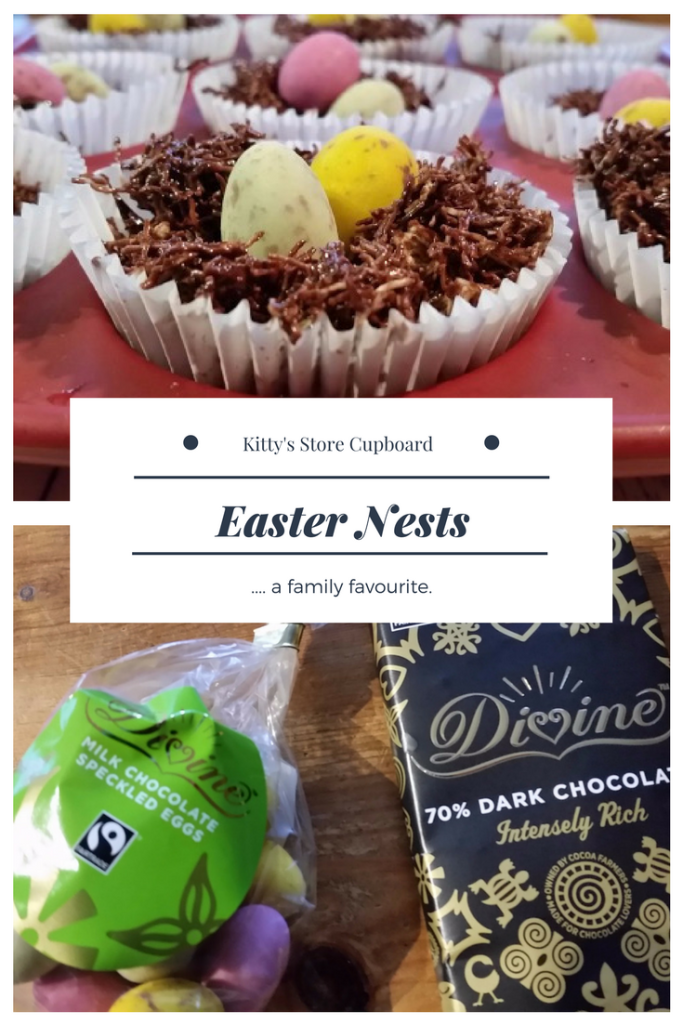
Easter Nests

Easter Nests


Easter nests; a firm family-favourite and as far as I am concerned the only good use of shredded wheat!
This recipe made nine nests.

Ingredients
100 g bar 70% Dark chocolate
1 tablespoon Golden syrup
25 g Butter
150 g Shredded wheat
(at least) 16 ‘mini-eggs’ or similar – I used Traidcraft little speckled eggs which are delicious and ethically sourced.

Method
Line a muffin tin with paper cases – pretty ones if you have them.
Slowly melt the chocolate, golden syrup and butter in a bowl over boiling water. The bowl shouldn’t touch the water.
When the above is melted and combined, crumble the shredded wheat into the bowl a bit at a time and stir in until well coated with the chocolate mixture.
Spoon into the paper-cases, making a little ‘well’ in the middle for the eggs.
Place in a cool place; try not to scoff them all immediately so that the chocolate has time to set!

Vegetable Chilli

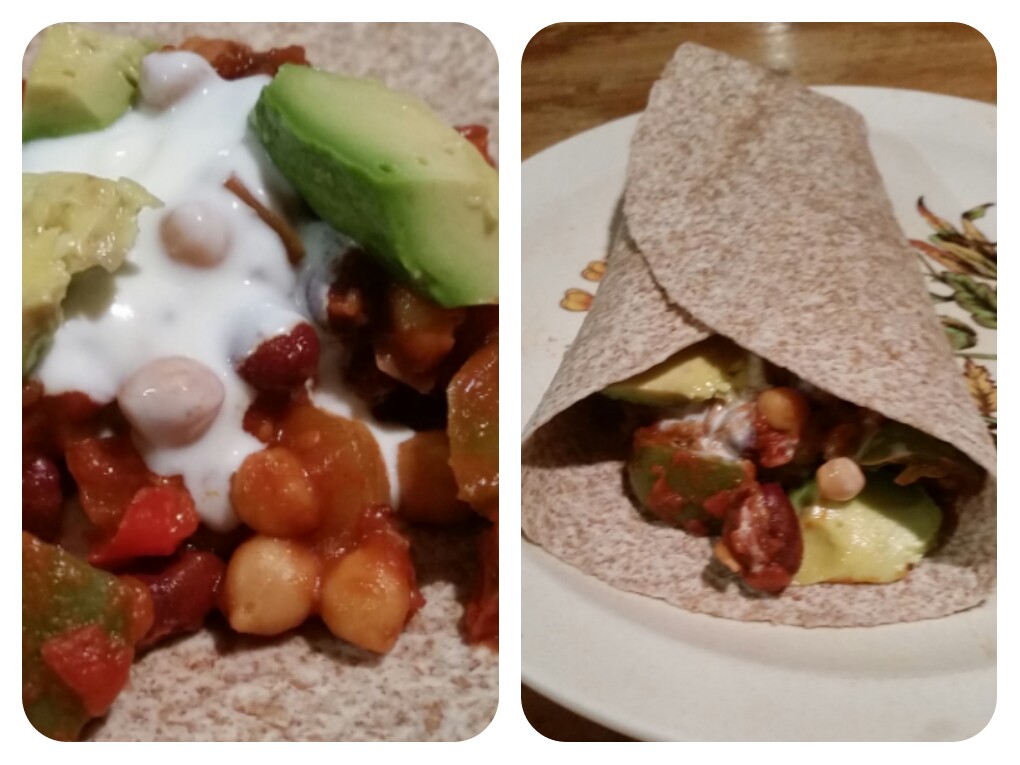
I  don’t think that this recipe needs much introduction. I love chilli, whether meat or vegetable chilli, and I usually make it up as I go along;  this is the first time that I have put enough thought into it to be able to write it down.wp-1459028741249.jpeg

Ingredients

  • 1 Onion
  • 1 teaspoon chilli flakes
  • 1 clove Garlic
  • 1 red Bell Pepper
  • 1 green Bell Pepper
  • 1 tin Chickpeas
  • 1 tin Kidney-beans
  • 1 tin Tomatoes
  • a good squirt of Tomato Puree
  • a square of dark chocolate
  • 1/2 teaspoon chilli salt (or, substitute in normal salt or vegetable stock and add more chilli to taste)

Method

Fry the onion, garlic, chilli and a couple of grinds of black pepper in some oil for a couple of minutes. Add the pepper and fry for another couple of minutes.

Add the chickpeas, kidney beans, tinned tomatoes, tomato puree and chocolate. Mix well, turn down the heat and cover with a lid.

Cook for about 20 minutes stirring occasionally. If it starts to look a bit dry add a splash of hot water from the kettle.

Taste, add the chilli salt until it suits your taste.

Serve with wraps and/ or rice, avacado, creme fraiche and cheese.

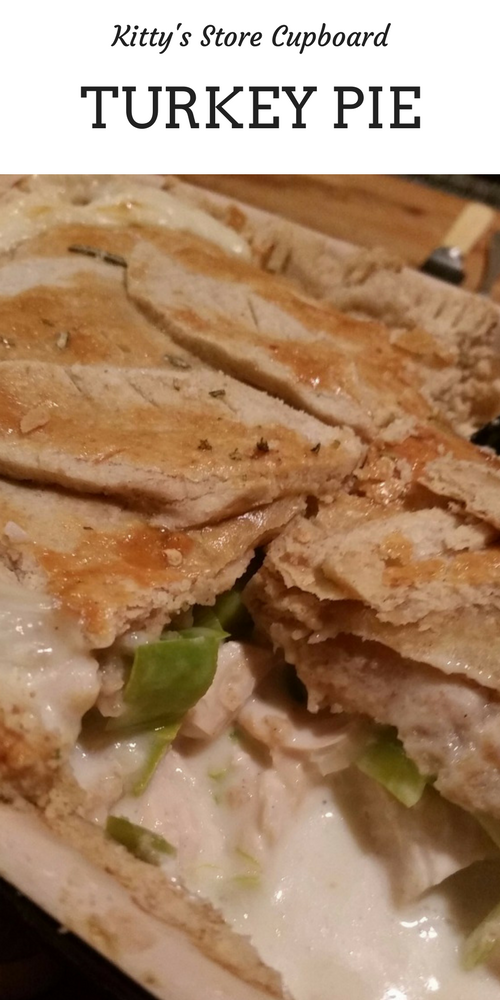
Turkey Pie!

This is part of my ‘Supermarket-free Lent‘ and also includes some Christmas leftovers. I love Turkey Pie; it is usually a Boxing-day meal in my family so it is quite a treat to have it in March. If I had had some I would also have added bacon or leftover gammon to the pie-filling; however seeing as I had defrosted the gammon in error a couple of weeks ago and ended up making a slightly unusual curry with it I had to make do!

This served three people with leftovers.

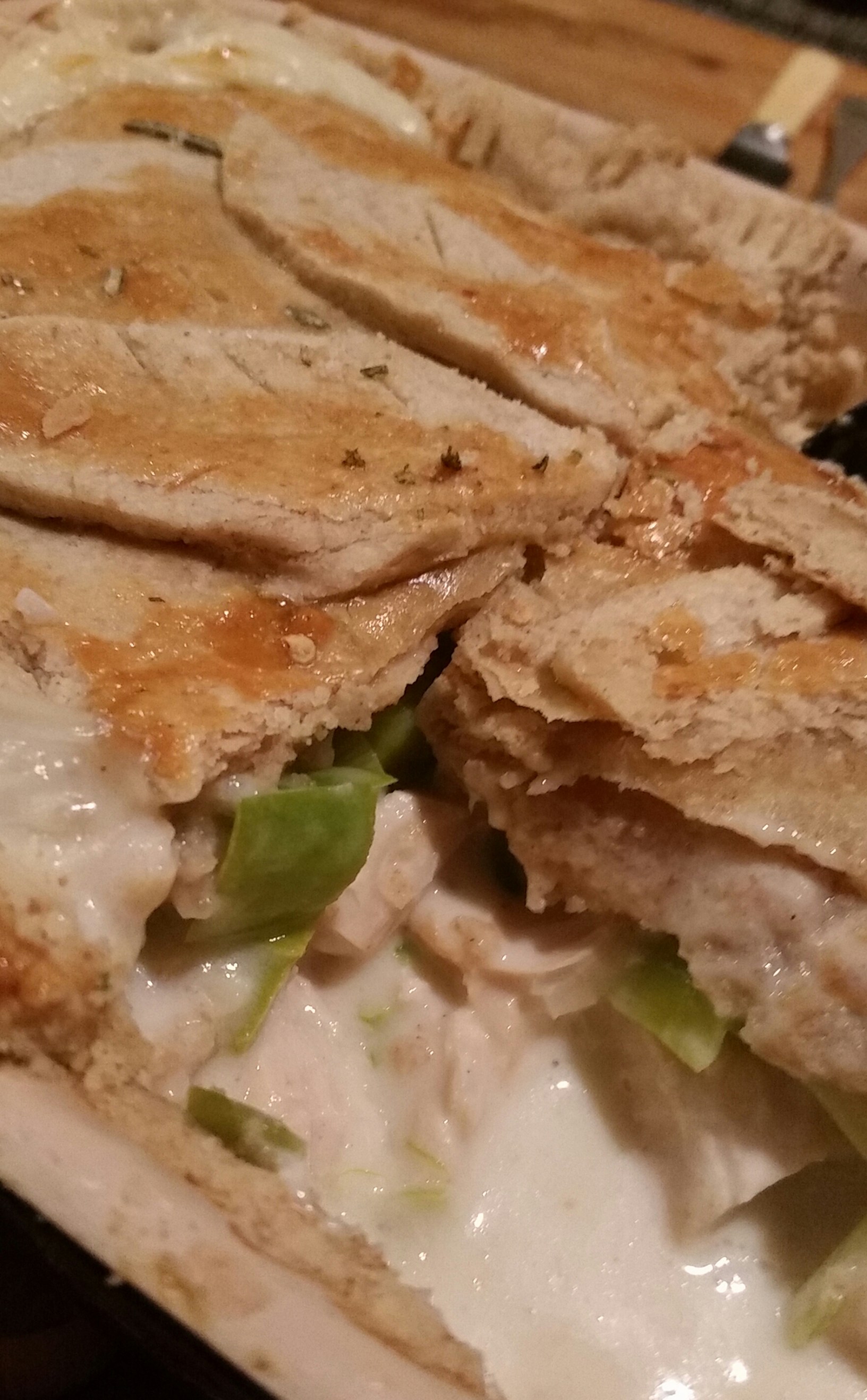
2016-03-04-20.01.51.jpg.jpeg

Ingredients

  • A couple of handfuls of cooked turkey (mine was leftover from Christmas), chopped into chunks
  • 1/2 Onion
  • a knob of Butter
  • A Leek
  • Mustard seeds
  • 3/4 Pint Milk
  • a heaped tablespoon of Cornflour
  • 1/2 teaspoon Mace
  • a slosh of Cream
  • Pepper

For the pastry

  • 8 oz flour
  • 4 oz fat (3 oz Margarine, 1 oz Lard)
  • 2 tablespoons of water

Method

For the pastry
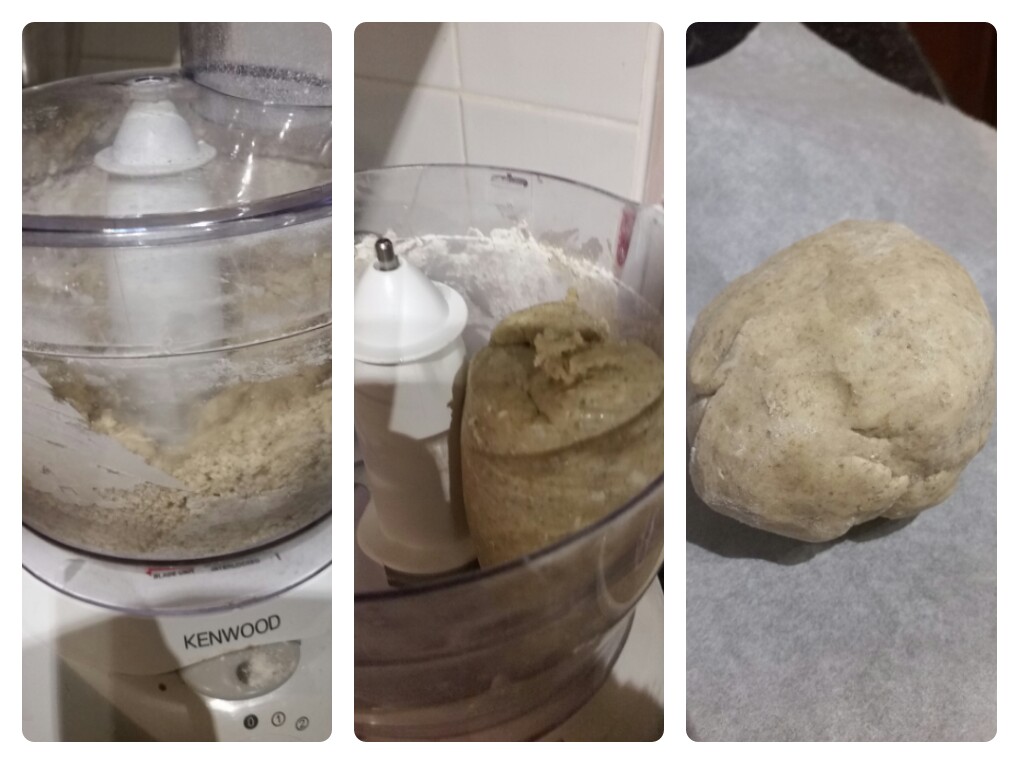
This is an Allcock-family cheat; put the pastry ingredients into a food processor and whizz until combined, adding more water if necessary a splash at a time. You will find that after a minute or so the pastry comes together in a nice ball ready to roll out.

wp-1457803915038.jpeg

For the filling
In a saucepan gently cook the onion and mustard seeds in the butter. Add the milk and heat slowly.  Put a heaped tablespoon of cornflour into a jug with enough cold milk to make a paste. Once you have a good paste add the warm milk and mix well, then return the mixture to the saucepan. Continue to cook gently, stirring frequently until thickened.
Next, arrange the turkey in the base of an ovenproof dish. Cook the leeks in a small amount of water for about 3 minutes and then add to the dish.
Cover with the white sauce and leave to cool  (otherwise the pastry will shrink).

Putting it all together
Preheat the oven to 200oC.

Roll out the pastry on a floured surface to approximately 1/4 inch thick. Put the dish with the filling next to the pastry and gently lift the pastry onto it by folding it back over the rolling pin. When the pastry is loosely covering the filling,  take a fork and push the pastry against the side of the dish all the way round. Then, either take a knife and trim the excess pastry off, or fold the edges back in on themselves for a more ‘rustic’ look (I tend to do this when the pastry is difficult to deal with and it looks a bit scruffy – pretend that it’s meant to be that way!). Pierce the pastry a couple of times with a fork and brush with egg. Grind some salt over the top.

Bake in the centre of the oven for approximately 1/2 hour, until the pastry is golden.

Any extra pastry can be used to decorate the pie or, if there is enough, to make jam tarts.

turkey pie


Mother’s Day Cupcakes

wp-1457276008806.jpeg

Both the baking and the writing of this post are a combined effort between myself and my 10-year old neighbour; we both wanted to make little cakes for our mothers and thought that it would be a good opportunity to share our favourite basic little-cake recipe with you and to do a couple of rather different variations on a theme. My neighbours and I spend many a happy hour watching Dr Who together so using the Dalek ‘cupcake wraps’ which I had purchased a little while ago (sadly discontinued) and had put away for a ‘rainy day’ was an obvious choice; it was decided that they would be chocolate-orange Daleks so the mixture included chocolate orange chips and they were topped with orange buttercream. My mother cannot stand buttercream (far too sweet) so I topped the little cakes with lemon icing and decorated them with stars (because she is a star!).

We look forward to hearing what weird and wonderful creations you make using this basic recipe – please send us a photo!

Ingredients
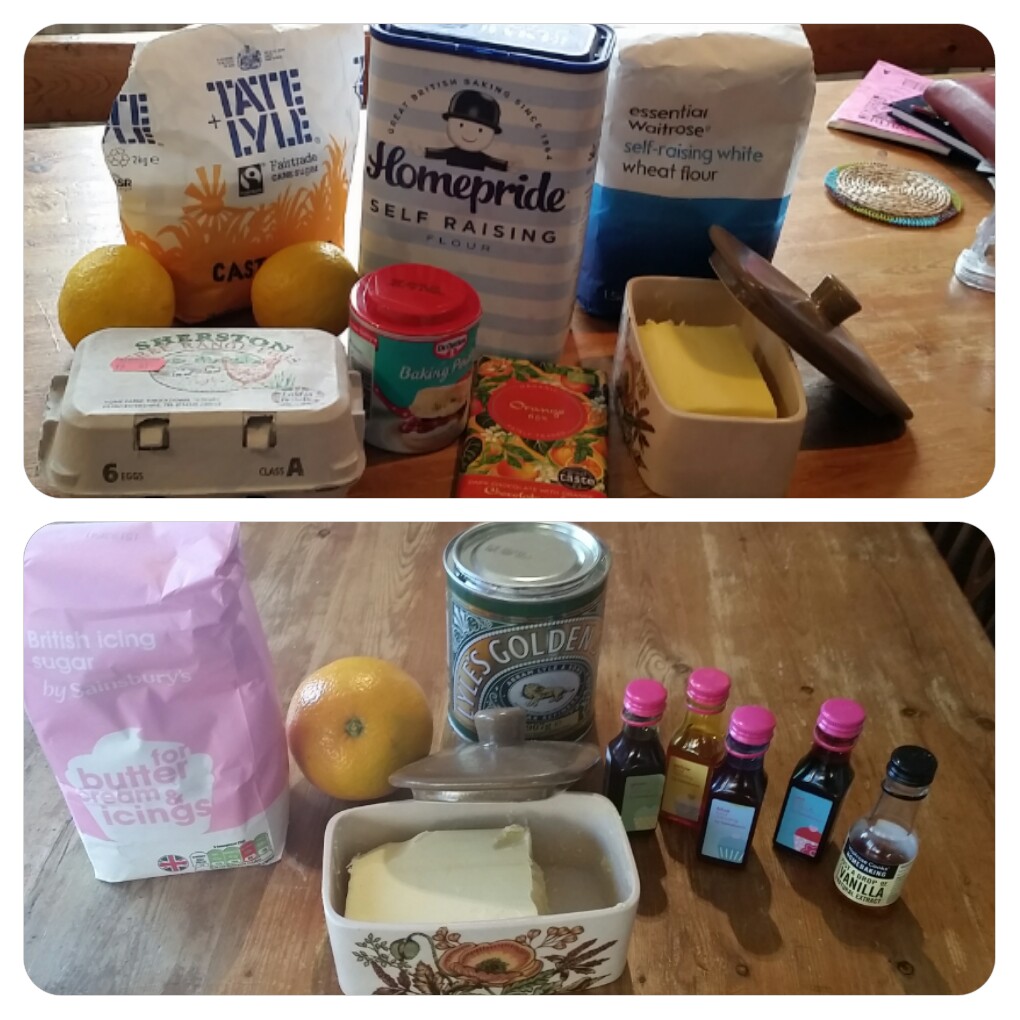
wp-1457272907413.jpeg

Basic sponge mixture

Makes approximately 24 cakes. You will see from the above picture that we used butter because I ran out of margarine; I wouldn’t recommend this because it makes the mixture a lot more dense. The observant amongst you will also notice that the photograph includes baking powder but that there is none listed below; this is because I am stupid and went on a wild-goose chase around Stroud before our baking session looking for the stuff (surprisingly hard to find the day before Mother’s day) only to remember when I got home that I didn’t need it. grrr.

  • 12 oz / 175 g Self-raising flour
  • a pinch of salt
  • 8 oz / 110 g Soft margarine
  • 80z / 110 g Caster sugar
  • 4 Large eggs
  • 2 dessert spoon lemon juice
  • grated rind of 2 lemons

For half of the cakes we added chopped chocolate – dark chocolate with orange. The dark chocolate works well because the icing is so sweet.

Butter Icing

We used this recipe for the piped icing with a couple of minor changes; we only used half the amount of the vanilla essence and we added zest from the orange. We used yellow, red and blue food colouring for the Daleks.

Lemon Icing

Icing sugar and lemon juice.

Method

Pre-heat the oven to 190oC.

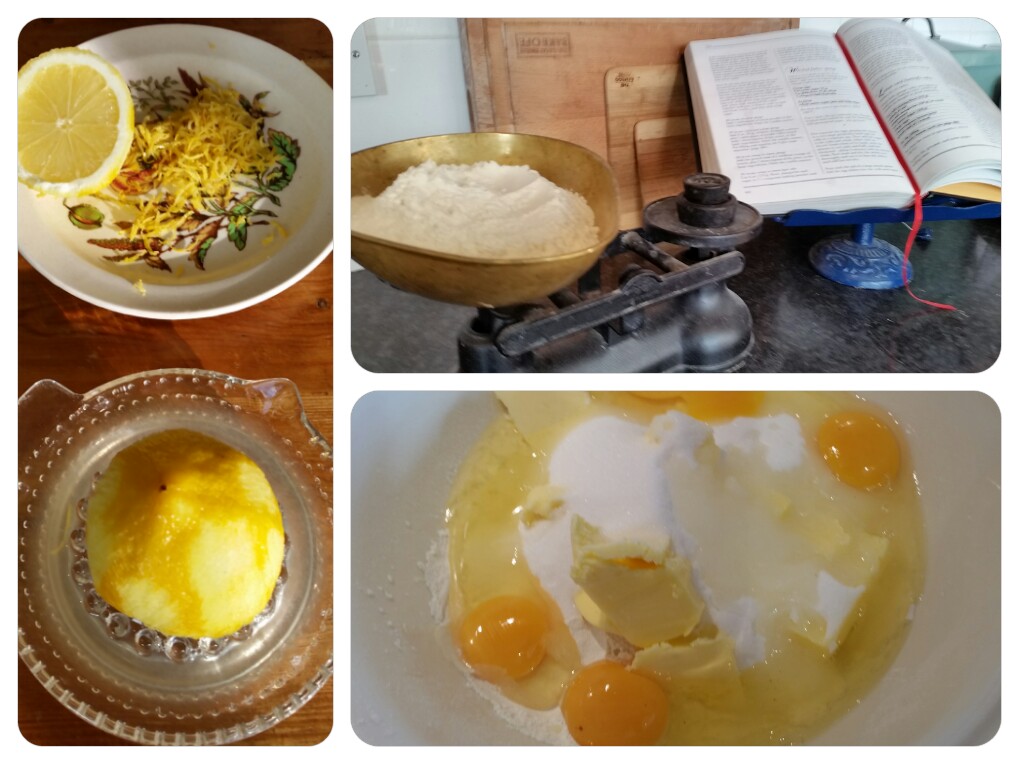
For the basic sponge mixture, put all of the ingredients into a bowl and combine with an electric whisk until very smooth. Transfer half of the mixture to another bowl and add the chopped chocolate.

Divide the mixture between paper cases – about a heaped tablespoon in each – and bake in the centre of the oven for about 15 minutes. Cool on a wire rack.
wp-1457272821665.jpeg

For the butter icing follow the recipe in this link, but use less vanilla and add some orange zest (it’s rather too sweet otherwise).

Take a quarter of the mixture put into a piping bag then, starting at the outer edge of the cake, gently squeeze the bag and spiral towards the middle. Transfer another quarter of the icing into a separate bowl and mix in yellow food colouring a drop at a time. When you have got a shade of yellow that you are happy with add the icing to the piping bag; you will need to ice a ‘reject’ cake to push the remainder of the plain icing through, then you can ice your yellow Dalek! Repeat this with the red food colouring. Finally, add blue food colouring to the remainder of the icing. It is important that you use a fresh piping bag for the blue because it doesn’t mix well with red and yellow!

For lemon icing, put approximately 6 heaped tablespoons of icing sugar into a bowl and juice a lemon (you can also use bottled lemon juice). Add the lemon juice to the icing sugar a dash at a time until you get a smooth, stiff consistency. Spoon onto the cakes and spread with the back of a knife.

Both mothers thoroughly approved!

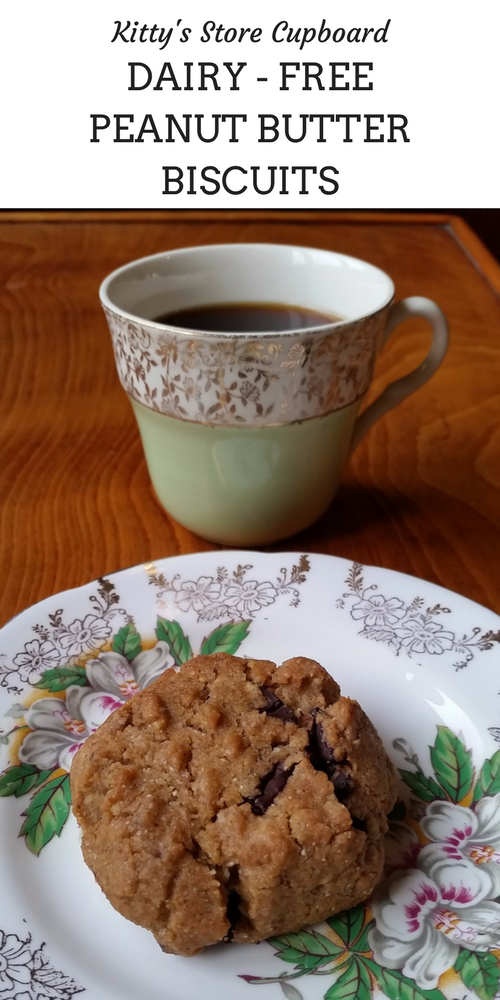
Dairy-free Peanut Butter and Dark Chocolate Biscuits

These Peanut Butter Biscuits are dairy free, delicious, and pretty healthy as biscuits go.

As you may be aware I have given up supermarket shopping for Lent. This has in general been a positive experience so far; however, right now when I haven’t been shopping for a few days it it is a bit of a pain because I have run out of what I usually consider to be a ‘basic’ baking ingredient – butter. Biscuits are required this evening because I have people coming over for a meeting, and having nothing to offer would be plain rude! However, every challenge is an opportunity and having successfully baked using olive oil in little cakes a few days ago I decided to trawl through my recipe books to find something I could easily adapt.

I used groundnut oil for this recipe because I happened to have some in the cupboard and I thought it made sense with the peanut butter, you can substitute in different oil if you like. Whilst on the subject of substitutions, the recipe which I (loosely) based these biscuits on asked for brown bread flour whereas I used Rye flour, again, because that is what I happened to have in the storecupboard.
wp-1456763136978.jpeg
Ingredients

Makes about 20.

  • 3 tablespoons Peanut Butter
  • 140 ml Groundnut Oil
  • a few drops of Vanilla Essence
  • 1 Egg
  • 125 g / 4 oz demerara sugar
  • 125 g / 4 oz White Bread Flour
  • a pinch of Salt
  • 1/2 teaspoon Bicarbonate of Soda
  • 125 g / 4 oz Rye Flour (or wholemeal)
  • 100 g Dark Chocolate, chopped

Method

Preheat the oven to 180oC.

Whisk together the peanut butter, oil and vanilla essence and then beat in the sugar. Add the egg plus a teaspoon of flour and beat well.

Sift in the white bread flour, salt and bicarbonate of soda and fold in.

Mix in the chocolate followed by the rye flour and knead until the dough holds together.

Roll small pieces of the dough into balls and place on oiled baking tray, leaving room for spreading. Flatten with a fork in a criss-cross pattern and bake for 20 minutes. Cool on a wire rack.

peanut butter cookies

Lent 2016

Hi ladies and gents,

It is a week since pancake day and I have yet to share my Lent Challenge with you which is rather remiss of me, sorry. I was a bit torn as to what to do this year, not least because in some ways fasting for Lent is quite a personal thing, and I wanted to make sure that I wasn’t choosing something just because it would be interesting to write about!

In the past I have given up various things; I have had a dairy-free Lent, gluten-free, vegetarian  (much to my mother’s annoyance when I was living at home and she was cooking!), caffeine free and last year I gave up coffee and wine. These have all been challenging in different ways, in some cases forcing me to broaden my repertoire of recipes and giving me an appreciation of other people’s food allergies and intolerances.

So, back to 2016. As some of you will know I am pretty passionate about sharing food, not wasting food and about being mindful about where food has come from. I wanted my Lent challenge to build on the discipline which my £5 a week challenge had instilled in me, and in addition to heighten my awareness as to the origin of  the food that I eat. I had a few ideas and a few suggestions from people including a vegan diet, something food-miles related, abstaining from alcohol, following the strict Greek Orthodox Lenten fast (effectively vegan plus wine-free with a couple of full fast days thrown in for good measure), cooking without the contents of my storecupboard, a zero food-waste Lent, cooking something new every day, and a complaining-free Lent (I like that idea and might try to do it anyway!).

I really liked the idea of having a ‘Local Lent’ based around food-miles, however, I found it rather difficult to get my head around what food-mile parameters I should set myself. Would it be just Gloucestershire, England, the UK, Europe? Or should I set myself a number of miles per week, so that if I had a cup of coffee I would be restricted in what else I could have?  If things weren’t labelled with country of origin would I have to make the assumption that I couldn’t have it? All a bit complicated!  Given all of the above what I finally decided upon is to have a Supermarket-Free Lent; so still a ‘Local Lent’ but with less maths! In addition I want to continue to be mindful about the quantity of food that I buy, making sure that I only have as much as I need, so I am giving myself the slightly less ridiculous budget of £10 a week for food and drink.

So what can you expect in the next few weeks? Probably lots of drooling over the delicious Pippin Doughnuts at the wonderful and award-winning Stroud Farmers Market – it’s a good job that I have given myself the £10 budget! There will also be some pretty amazing recipes coming your way; I have no idea yet what they well be, we will all have to wait and see what inspiration my local shopping gives me!

Ta’ra for now!

Kitty

image
Stroud Farmer's Market

Seabass with Icelandic Kelp Salt

Source: Seabass with Icelandic Kelp Salt

Get me – I’m a ‘guest blogger’! Take a look at my yummy fish recipe, written for the lovely Engineering and Scientist ladies  (and gents) who follow A Hedy Journey.

Kitty’s Shrove Tuesday Feast

I hadn’t planned on writing a Pancake Day blog post; but then I don’t think that I have planned any of my blog posts so far so nothing new there! My impromptu three-course pancake feast was so spectacular though that I just had to share it with you.

wp-1455049718599.jpeg

The problem with not having intended to write this up is that it is rather difficult to communicate the batter proportions to you because I did it by eye. I added a little bit of Rye Flour (~ 1/4), which was a first for me and was rather nice. I tend to use half milk half water. For the savoury pancakes I made the batter rather thicker than I would usually, and then added more liquid when I got to the sweet pancakes.

The First Course

  • pancake batter
  • lemon thyme from the garden
  • smoked salmon
  • plain yoghurt
  • ground black pepper

Heat some high smoke-point oil (Rapeseed is good) in a non-stick pan. When the oil is hot add the batter and sprinkle the lemon thyme leaves on top. Flip the pancake after about a minute, then flip again so that both sides are cooked.

Put the pancake onto a plate and top with the salmon, yogurt and black pepper.

The Second Course

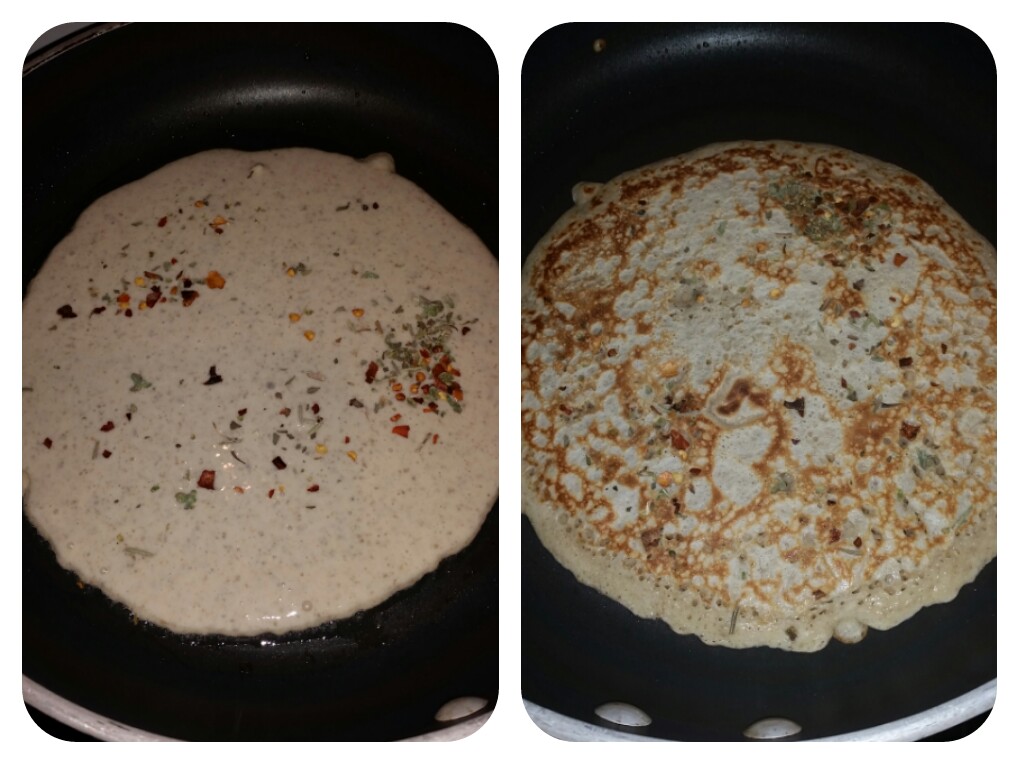
For this course I made a larger pancake in the same way as above, but instead of the thyme I used chilli flakes and some mixed herbs.

wp-1455049809039.jpeg


For the filling I used meatballs and tomato sauce which I had made earlier in the day and re-heated; very similar to the meatball pasta sauce which I have shared with you previously.

Pudding!

So I said that I added more liquid when I made the sweet pancakes, what I didn’t tell you is that the liquid was gin and tonic! I decided that G&T pancakes required only lemon and sugar as a topping. This was a little experiment which definitely worked – yum!

2016-02-09-20.32.45.jpg.jpeg

And finally, Shrove Tuesday today means Ash Wednesday tomorrow. I am in the process of deciding on the details of an interesting challenge for Lent, I’ll keep you posted.


Making Stock

Caution: not for veggies or vegans!

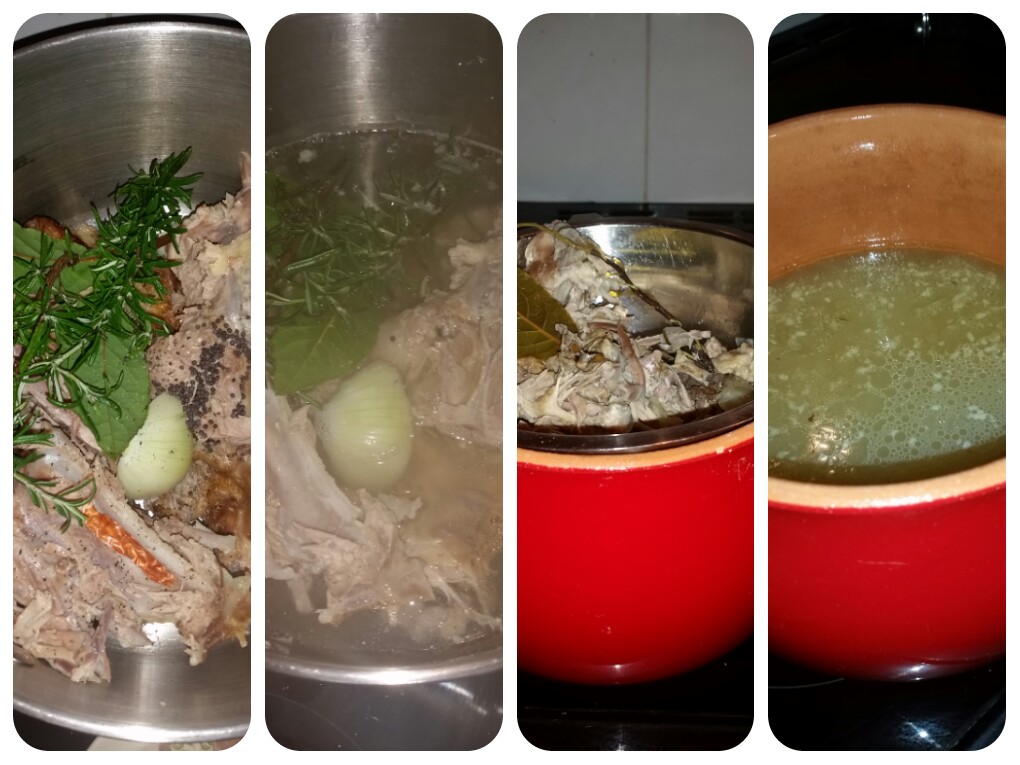
Those of you who have been following my £5 a week January challenge will know that I make a habit of pulling various types of stock out of the freezer in order to liven up my cooking. Some of the stocks which I freeze are incidental leftovers, usually liquid from my slow-cooker, and are therefore never the same twice. However I do sometimes make stock in the traditional ‘boil a bird carcass to death with herbs and onion’ way, which I thought I would share with you as a nice example of frugal cooking.

You probably don’t need much more instruction than ‘boil a bird carcass to death with herbs and onion’ but I will elaborate a little below. wp-1454599578095.jpeg

Ingredients

  • the leftover carcass of a roasted bird (the one pictured above was a duck, which my mother cooked last time I visited for a meal)
  • an onion, quartered
  • a couple of sprigs of rosemary
  • a couple of bay leaves
  • a dried chilli
  • a teaspoon of mustard seeds
  • a generous grind of black pepper
  • a teaspoon of salt

The rosemary and bay leaves are from my garden; they are both good winter herbs which are useable all year round and are not difficult to grow.

Method

Take any remaining easily accessible meat from the bone (good for sandwiches!) and then place the carcass into a big pan. Add the onion, fresh herbs, dried chilli, mustard seeds and black pepper and cover the whole lot with boiling water from the kettle.

Simmer for about 3 hours. Add the salt towards the end.

Put a colander or sieve over a large bowl and carefully tip in the contents of the pan. Dispose of the bones and herbs.

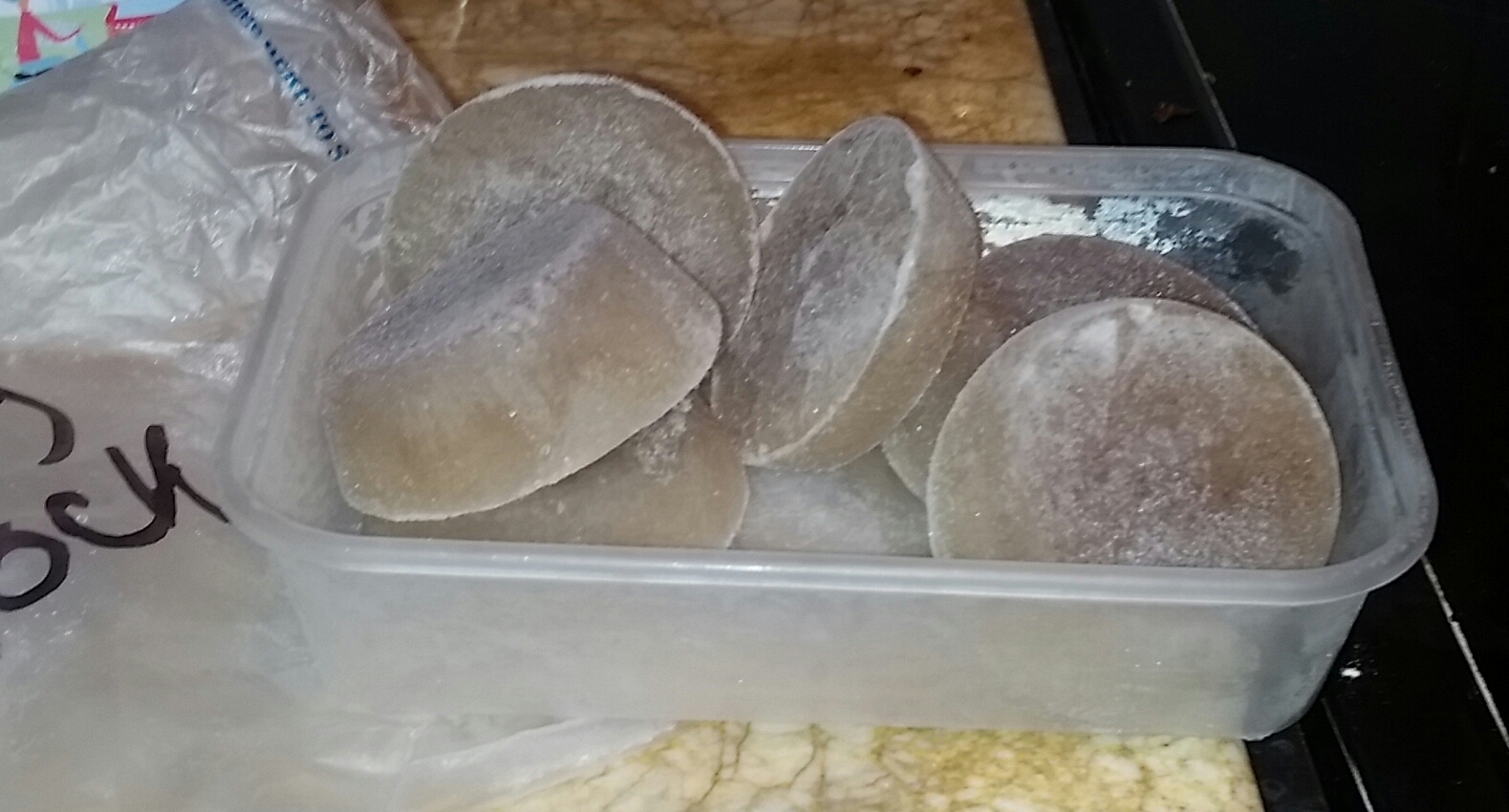
When the liquid is cool divide it between pots for the freezer or, even better, pour into a silicone muffin tray to make big stock ‘ice-cubes’. You may find that with fatty birds such as duck you have a layer of fat on top of the cooled liquid; this can be skimmed off first and is rather good for roast vegetables.

2016-02-04-15.55.56.jpg.jpeg

Done!